
On Grief: Two Years Later
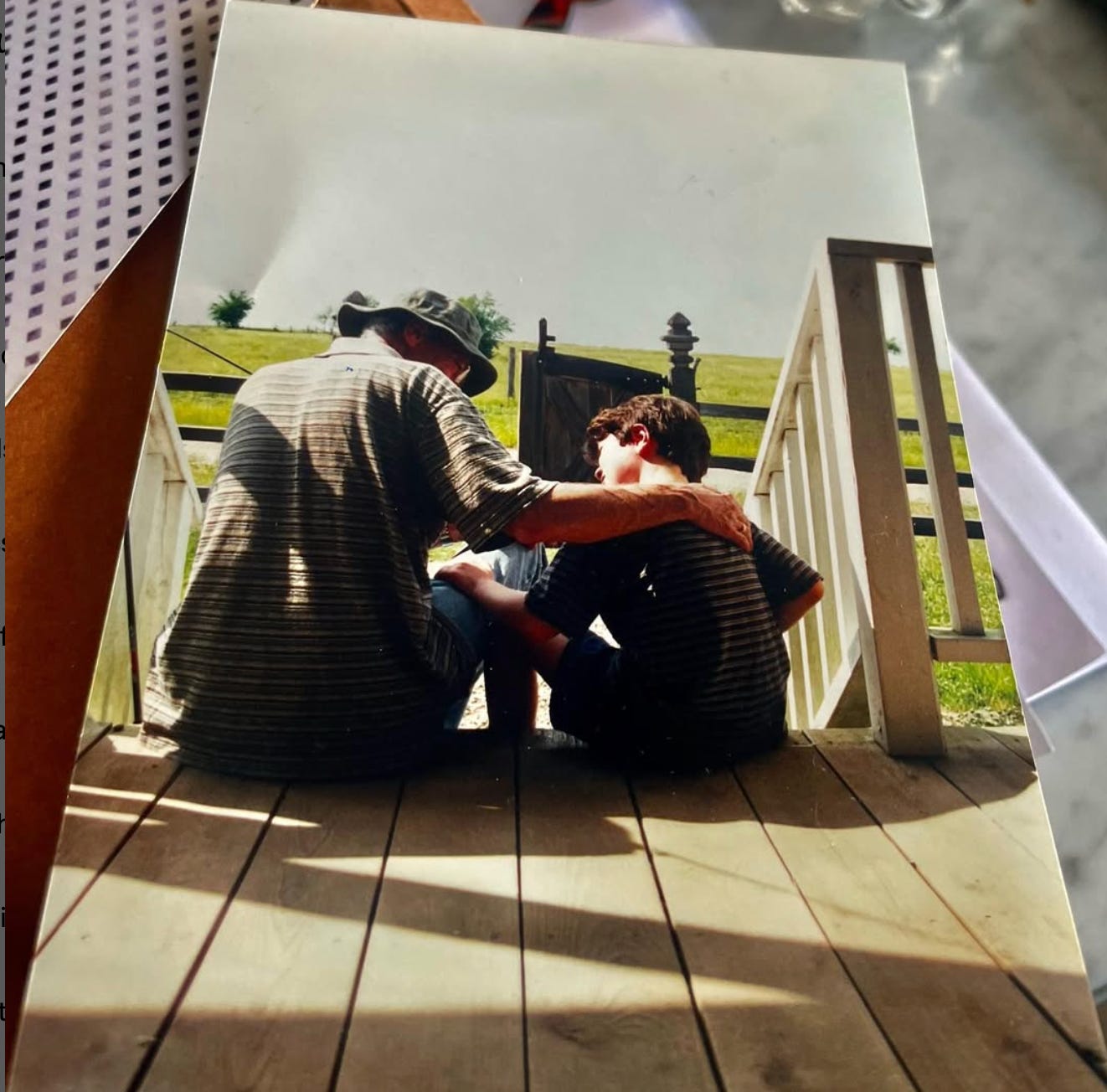
I recently got into journaling as an exercise, privately. After some thought, I felt like sharing my experience with long term grief publicly as it might help people navigate their own journeys through the process especially since I know quite a few people right now dealing with their own struggles.
No single person processes it in the same way. No one really fundamentally gets you but you. That’s the caveat here.
About two years ago, I lost my dad after a brief battle with liver cancer. Recently, my grief has hit me much harder than I expected — even more than it did in the immediate aftermath and more intensely than last year in the weeks leading up to the first anniversary. Since my mom passed in 2007, around this same time of year, the early months before the anniversary have always been tough, but the real weight of it didn’t seem to hit until about two or three years after the first anniversary. I suppose that’s just part of how grief works in my situation.
I thought this time would be a bit different with dad because, at least, I’ve had some practice. This is not my first rodeo. As an adult, I’m more in touch with my feelings and what they mean. My pain manifested in different ways—like when I passed a restaurant we used to go to together, or when I met someone named Marvin—if you didn’t know him, he really loved that name, with no logical explanation as to why—or when something happened in my life that would have been the exact moment I would’ve called him. There seemed to be no rhyme or reason to it otherwise.
But part of the process that has gotten me so emotional recently is the anniversary coming up, and at this time, something feels different. Frankly, it might be hitting the acceptance stage or something. Honestly, I really do not know.
After losing someone, the idea that their life dissolves into a series of accounts, things, and anecdotal stories is depressing—and such a hard thing to wrap your head around. At the end of the day, it’s hard to ask is that all we are as people? Is that what all our lives come down to in the end?
Obviously, his stories live on, the items with sentimental value live on, and the weird, sometimes off-putting quirks we inherited. For his birthday one year before he died, I bought him a Hudsonville Ice Cream scoop. I have it in my kitchen, and every single time I see it, I cry. I have this awful Cuisinart that doesn’t even work, but it reminds me of making latkes as a kid.
I still have his voicemails: “Hey Andy, it’s your dad, call me back when you can.” I’m so grateful to have those but at the same time, is that it though? Is that what all this comes down to? — Guys don’t get annoyed when you get those from your parents — the sound of their voice is one of those memories that fades fast and those recordings make a difference just to know that you have.
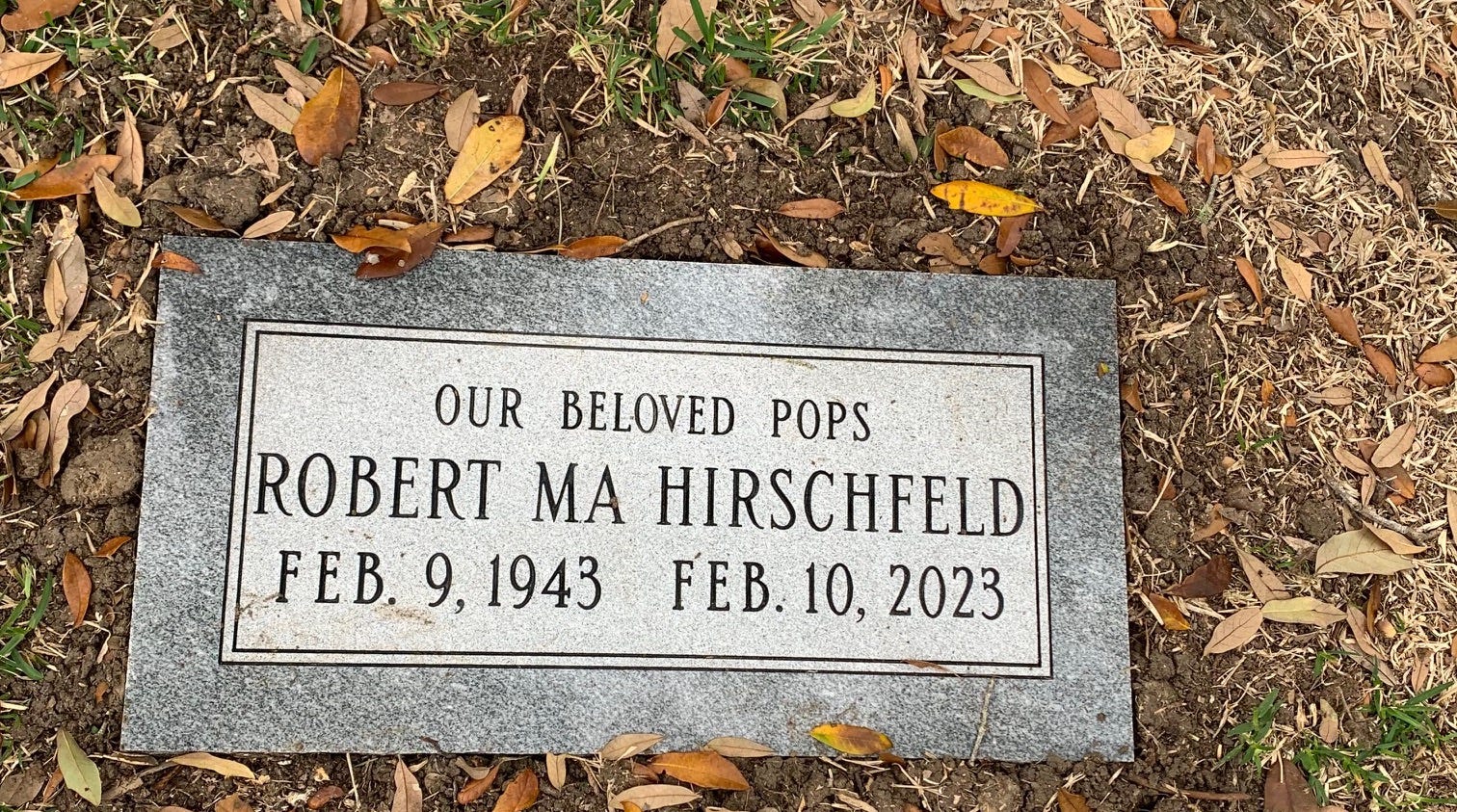
Two years later, the mourning process feels different. It’s about who I am moving forward, and my tendency to overthink everything definitely does not help. First off is my health—he died quickly. Thanksgiving was when I first noticed something was really wrong. By early February, he was gone. Now, every single time I get a minor ache or pain, my mind goes to the worst place. I’m a hypo-hypochondriac. Personally, I think WebMD should have a warning that says, "Are you sure you really want to do this?" before you enter the site for people like me.
My mom died of breast cancer in her 50s, and the first time she had it was the same age I am now. My aunt also died from breast cancer in her late 40s, and my grandfather died of cancer around 40 as well. On the other side, my dad’s mom is alive and about to turn 105. The longevity is amazing but drastically different. Where do I fall? If I plan for my own future, how long is that future going to be, really? That’s a daily question I ask myself.
Otherwise, life has been pressing on. My personal life has been a big part of what’s been on the top of my mind lately and the role my dad played in them. Until about ten years ago my dad and I had a fairly distant relationship but that quickly changed when we both moved to New York.
In recent years, I usually told my dad about dates I was excited about, which, in today’s dating market, are few and far between. To channel my inner Jerry Seinfeld, it’s either I don’t like them, or they don’t like me. I told him about the girls that I thought could have been the one or even the horror stories that I knew were not going to go anywhere.
In recent years, dating app culture has ruined us as a society—even for people who date in person — those conversations adapted — especially because the idea was such a foreign concept to him, he just listened. I rarely heard the “well in my day” bullshit.
To be honest, these days my luck has been limited. It’s infuriating on its own but no longer having that person to vent about that issue with, let alone discuss how much dating apps, and social media changed dating in New York City for the worst.
I can imagine still having those conversations with dad about this, on the five minute walk from the subway to the front door of my apartment building after a long day. The memory of it makes me smile and tear up at the same time. The fact that I cannot have that conversation is a painful reality I have to live with. He’d listen, not throw in a counter point or make a point in agreement. He would just listen to those gripes.
Which, by the way, took him a long time to embrace as a practice. It did not come to him naturally. It took work and I noticed the effort.
I wish I could talk to my dad about it like we used to. Maybe tell him that “If I hear one more family member say, ‘When are you going to meet a nice girl and settle down?’ I’m going to have a fucking aneurysm.”
I never thought dating and mourning would overlap so much—except for that really odd moment where I ironically went on a few dates with a death doula just a few weeks before my dad went into hospice. That was weird.
Then there’s my career. Even when shit wasn’t going great, he didn’t deter me from a career I loved—despite how much easier it would have been to leave it behind – which I will always be thankful for. Most parents would have done that.
Both my parents did things that left legacies—my mom’s consumer reporting for ABC and CBS led to major safety reforms in items we still use every day. My dad’s Mood Disorder Questionnaire—which he would not shut up about—changed the way doctors diagnose mood disorders. His research made a big difference in many lives, and his expertise was so widely known he was featured and quoted in the New York Times, Washington Post, and even appeared on the Oprah Winfrey Show.
Those accomplishments are long-lasting, and the impacts outlive us all. I want that. I want a career that leaves an impact that will last beyond my last day on the job. His loss only reinforced those beliefs. That’s why I’ve dedicated myself to a career as a journalist—that, like those choices, will ensure my life’s work is here long after I am.
But there is a silver lining, since his death, I’ve doubled down on healthy habits—going to the gym 4-5 times a week, getting back into hobbies, cutting caffeine and alcohol (for the most part — I’ve had my moments — mostly with Negronis), meditating, therapy, building a strong financial safety net, and strengthening the meaningful relationships in my life. That’s a really good thing of course.
Anniversaries remind you of this, they’re hard to stomach but you have no choice but to power through it.
Obviously, these are challenges we all face, but with the weight of grief, they feel like a heavier burden and make you think more existentially about who you are today, who you’ll be tomorrow, if there will even be a tomorrow—and will, like my grandmother, I live well over 100? And what legacy will I leave?
If you’re dealing with grief, you’re not alone. There’s no shame in sharing — in fact, it could help others navigate their own journey. If it takes you a long time to process it, that’s normal. If you don’t feel anything immediately, you’re not a psycho, you’re in shock. If grief rocks you to your core, 10 years later, 20 years later. That’s normal too. There’s no right timeline.
If you know someone in mourning, know that the everyday stressors we all deal with carry that much more weight and are an invisible affliction. But we need to carry on, because loss happens and we need to move through our lives —- but that doesn’t mean that baggage really ever truly goes away.